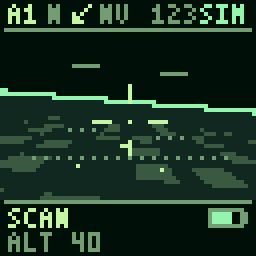
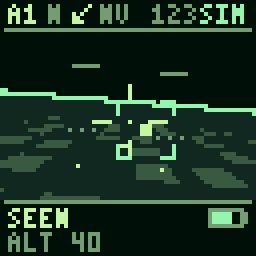
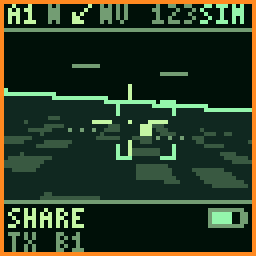
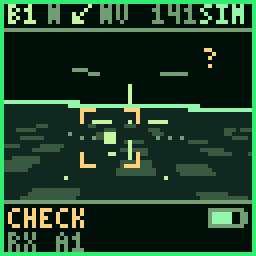
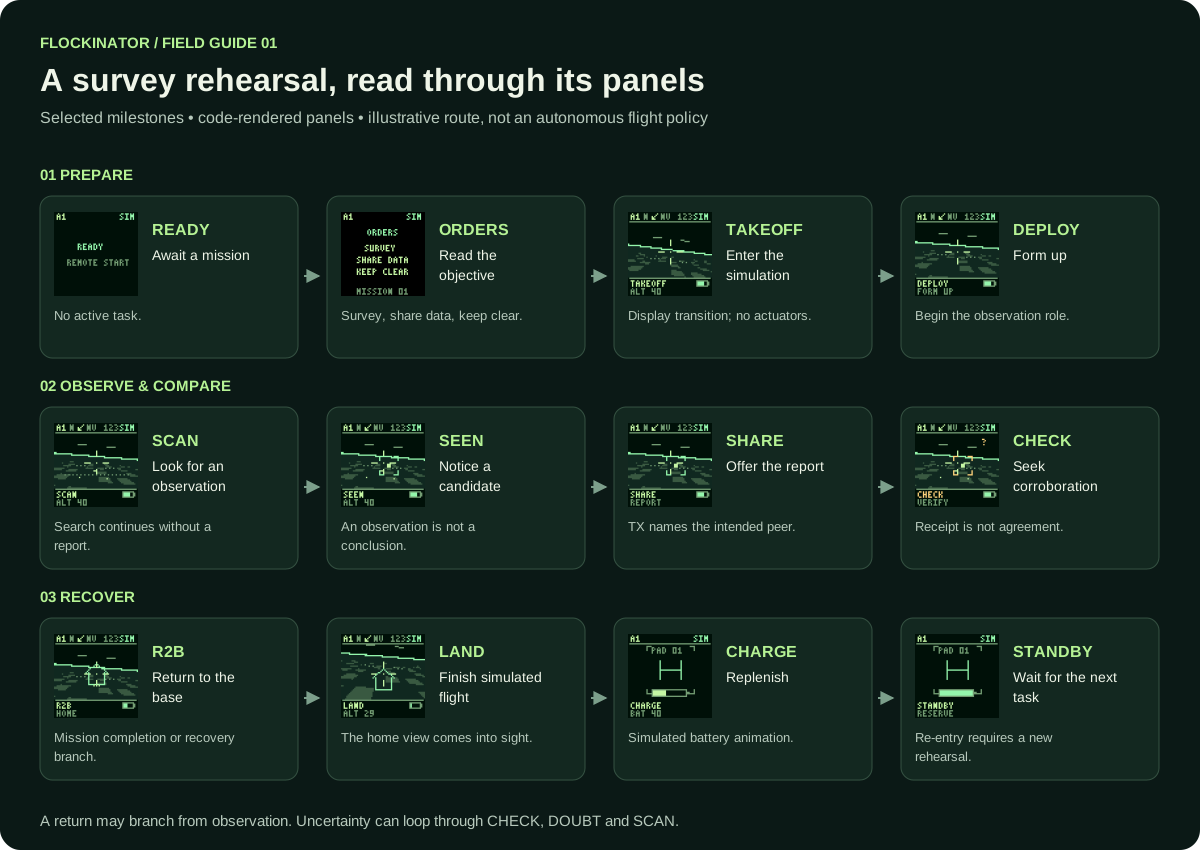
An observation becomes a report. A report invites another viewpoint. The panels make that sequence visible—provided we know what each signal actually means.
The objective changes the interpretation of a state: Observe surveys the scene; Compare reports highlights checking and disagreement; Recovery foregrounds returning and availability. These are the model’s existing goal labels.
Selected milestones, not a promise that every node visits every state in this order. Open the diagram for full size.
The simulated world
The camera view, sensor styling, altitude and battery graphics communicate a simulated situation. A moving view is not proof of a real flight controller, a sensor reading or an optimised route.
The physical panel
The ESP32 renders a 64 × 64 frame. Each thumbnail here comes from that firmware renderer with an explicit documentation fixture. It is not a live screenshot.
The experiment
The communication-learning lab is a separate controlled exercise. Its observations, decisions and outcomes can test whether messages help. The animation alone cannot.
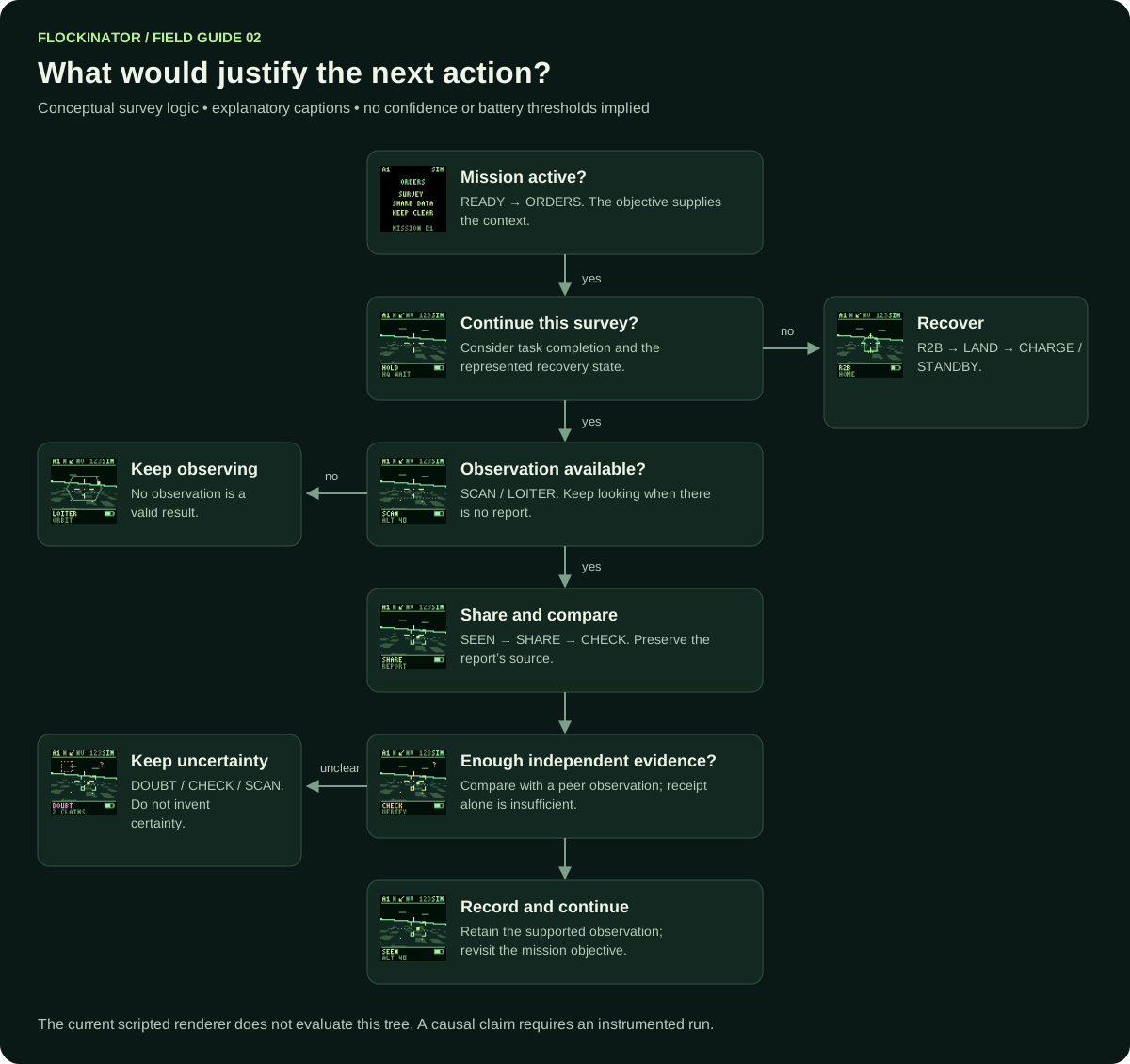
02 / An explanatory decision tree
What would justify the next action?
Use this tree to narrate the survey. It describes questions an experiment should make observable, rather than claiming these are implemented autonomous transition rules.
For actual behaviour, inspect the versioned scenario and its event trace. No real-aircraft thresholds are implied.
03 / A message is an event, not a conclusion
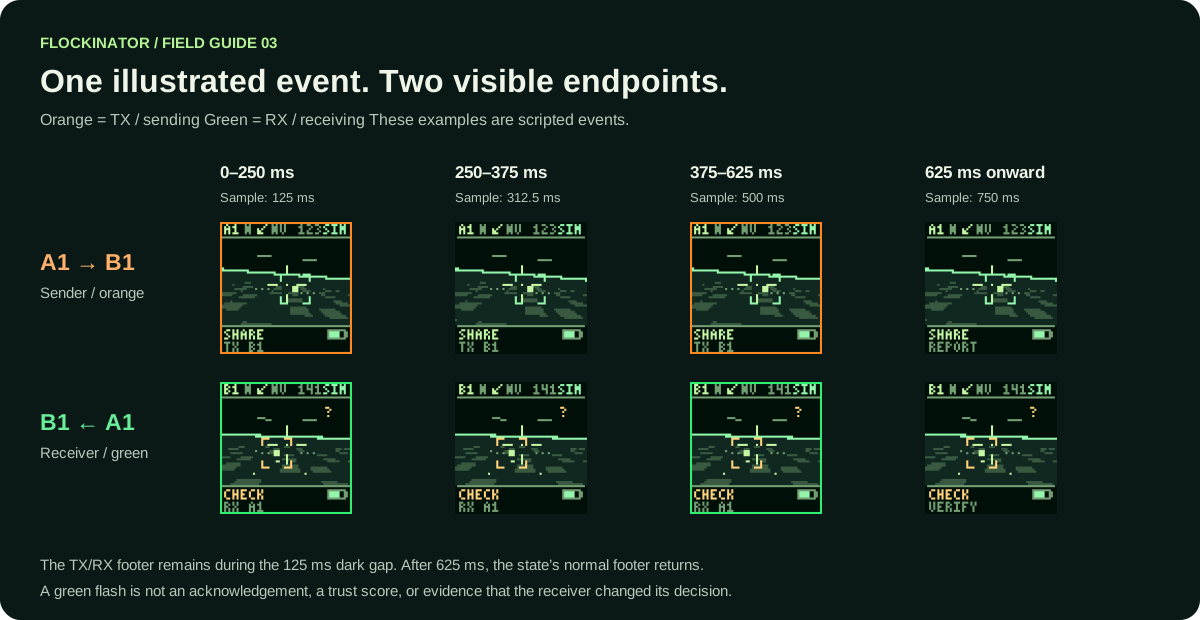
Read the border, then the evidence.
Orange / TX — sendingGreen / RX — receiving
The one-pixel border is on for 250 ms, off for 125 ms, on for 250 ms, then off. The footer temporarily shows the peer: TX B1 on A1 pairs with RX A1 on B1. TX ALL denotes a broadcast; receivers still name the source.
The source colours are #ff8a24 and #32ed70, quantised by the panel’s RGB565 format.
“Come and look”
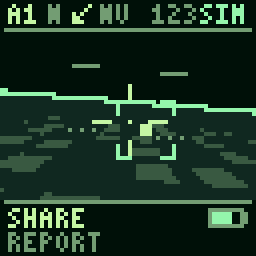
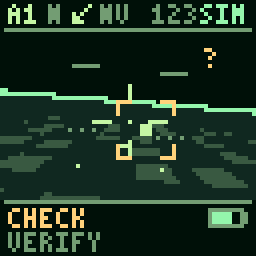
SHARE / REPORT followed by CHECK / VERIFY is a useful explanatory vocabulary for inviting corroboration. It is not a literal payload decoded from these images. A real assessment needs the sent report, its receipt and the recipient’s later action.
Broadcast
The preview can show one source and multiple recipients from one scripted event. This explains the event’s scope. It does not mean the receiver acknowledged it, believed it or agreed with it.
Missing or conflicting reports
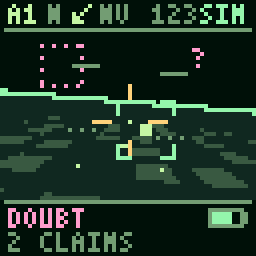
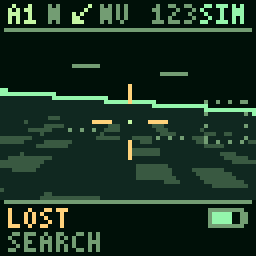
LOST concerns an observation. NOLINK concerns the represented stale view. DOUBT concerns conflicting claims. Keep these distinctions visible instead of treating every failure as “bad communication.”
04 / A shared observation needs an owner
The coordination rehearsal.
The browser preview includes a separate 12-second illustration. Roles and P1 labels are predetermined. It makes a cooperative observation story legible; it does not demonstrate a learned auction or consensus protocol.
Preview time
Display
Story shown
Communication cue
0–2 s
ALERT
A source announces symbolic beacon P1.
Source broadcasts.
2–4 s
PRIORITY
P1 is shown first in the task order.
No new event in this phase.
4–6 s
CLAIM / CHECK
Two selected nodes offer to inspect.
Claims at 4.000 s and 4.875 s, addressed to the source.
6–10 s
ASSIGN / YIELD
One node owns the observation; others yield.
The source broadcasts the assignment at 6 s.
10–12 s
SEEN / SCAN
The owner observes; other nodes resume scanning.
No new event in this phase.
These times describe previews/recon-hud/coordination.mjs, not the firmware’s complete mission schedule. In particular, the assignment broadcaster is the source; its identity can differ from the owner shown on the panels.
05 / The panel vocabulary
Twenty-five of thirty states, explained.
The first-person lines are presenter captions. Open each card for the visual meaning and the next question to ask. Scope: the firmware enum has 30 states; this atlas shows 25. ENGAGE and KILL are outside this non-weaponised survey scenario; FRIEND, TARGET, and BLANK are not shown.
25 of 30 states shown
Prepare
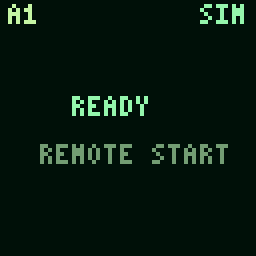
READY
Waiting for a mission
“I have no active task.”
Meaning and next decision
The panel shows READY and REMOTE START.
Next: An operator-authorised rehearsal can begin. Readiness is a display state, not proof that every subsystem passed a pre-flight check.
Prepare
APPROVED
Mission acknowledged
“The demonstration has been authorised.”
Meaning and next decision
MISSION APPROVED blinks on a black panel.
Next: Show the mission briefing. This is not a real aircraft arming signal.
Prepare
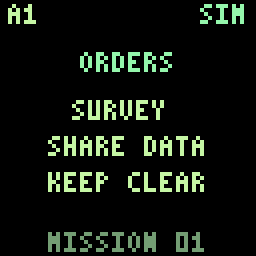
ORDERS
Understand the objective
“My task is to survey, compare reports or recover.”
Meaning and next decision
The briefing shows SURVEY, COMPARE or RECOVER with SHARE DATA and KEEP CLEAR.
Next: Interpret later observations against the selected objective. The illustration uses the survey briefing.
Prepare
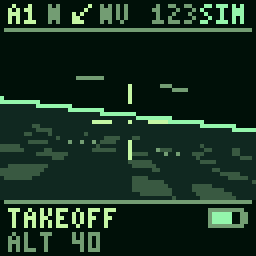
TAKEOFF
Enter the simulated world
“The rehearsal is starting.”
Meaning and next decision
The camera and altitude presentation transition into the flight view.
Next: Proceed to the deployment presentation. No motor command is produced by this renderer.
Prepare
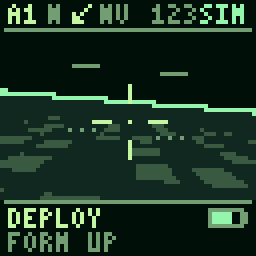
DEPLOY
Form up
“I am moving into my assigned part of the scene.”
Meaning and next decision
DEPLOY and FORM UP accompany the simulated movement.
Next: Begin the observation phase. The moving picture alone does not establish a computed flight plan.
Observe
SCAN
Look for an observation
“I am looking for something relevant to the task.”
Meaning and next decision
A scanning overlay marks the observation phase.
Next: Keep searching, or enter SEEN when the scenario presents a candidate observation.
Observe
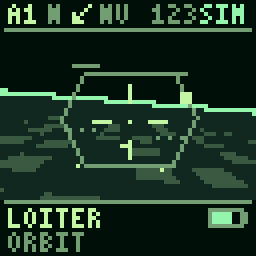
LOITER
Continue observing
“I am maintaining an observation role.”
Meaning and next decision
LOITER is accompanied by a GRID or ORBIT caption.
Next: Continue observing, respond to a review request, or move into the recovery branch when the scenario requires it.
Observe
SEEN
A candidate observation
“I have noticed something; I have not established what it means.”
Meaning and next decision
A bracket highlights an observation in the scene.
Next: Share a report or seek a check. A bracket is not a confidence score or proof of correct identification.
Communicate
SHARE
Offer a report
“Another node may benefit from what I observed.”
Meaning and next decision
SHARE normally shows REPORT. During a communication event, the footer can show TX plus the peer label.
Next: A receiver can consider the report alongside its own observation. The current scripted flash does not itself deliver a real payload.
Communicate
CHECK
Seek corroboration
“I need to compare this report with independent evidence.”
Meaning and next decision
CHECK and VERIFY identify a review state; an RX footer can temporarily replace VERIFY.
Next: Continue observation if evidence is incomplete; record agreement or disagreement in an instrumented experiment. Do not equate receipt with agreement.
Communicate
DOUBT
Keep uncertainty visible
“The available reports do not yet agree.”
Meaning and next decision
DOUBT, a contrasting reticle and the 2 CLAIMS caption show a conflict presentation.
Next: Request another check, keep the observation unresolved, or resume the survey. Two claims can repeat the same source and are not necessarily independent.
Observe
LOST
Observation no longer available
“I cannot currently maintain this observation.”
Meaning and next decision
LOST is accompanied by SEARCH.
Next: Revisit the observation task or record that the evidence is unavailable. It does not mean that the network link has failed.
Observe
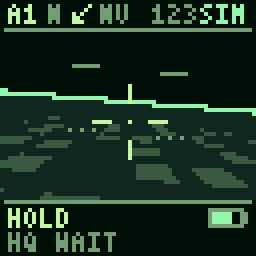
HOLD
Wait for coordination
“I am waiting for the next task decision.”
Meaning and next decision
HOLD and HQ WAIT distinguish waiting from active observation.
Next: Continue when the scenario supplies the next instruction. A waiting panel is not evidence that a model is currently thinking.
Coordinate
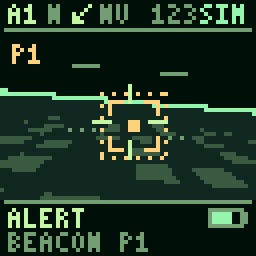
ALERT
Announce a shared observation
“There is a symbolic beacon for the group to review.”
Meaning and next decision
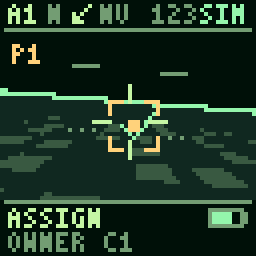
ALERT shows BEACON P1. In the coordination fixture, its source transmits to the other panels.
Next: Move into the fixture's review sequence. P1 is a scripted label, not an inferred urgency or confidence value.
Coordinate
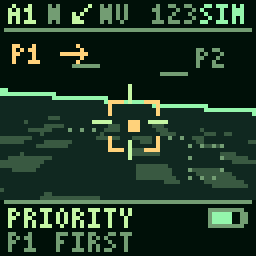
PRIORITY
Display the selected task order
“The rehearsal is considering P1 first.”
Meaning and next decision
PRIORITY displays P1 FIRST.
Next: The fixture presents candidate volunteers. This display does not implement a learned priority calculation.
Coordinate
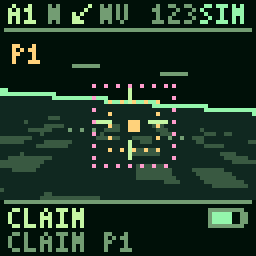
CLAIM
Offer to inspect
“I am volunteering for this observation task.”
Meaning and next decision
CLAIM displays CLAIM P1. Two predetermined participants send their claims separately to the source in the preview fixture.
Next: Wait for the assignment presentation. A claim is an offer, not ownership or evidence that the node is best placed.
Coordinate
ASSIGN
Show the observation owner
“I have the observation role for this rehearsal.”
Meaning and next decision
ASSIGN displays OWNER and a node label.
Next: The chosen observer continues observing. The fixture chooses the owner deterministically; no bidding optimisation is demonstrated.
Coordinate
YIELD
Avoid duplicate ownership
“Another node owns this observation task.”
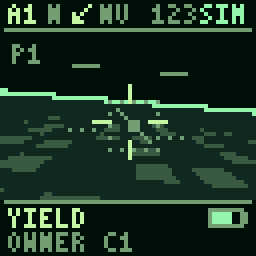
Meaning and next decision
YIELD displays the same OWNER label as the assignment.
Next: Other participants can return to their survey roles. This is a presentation of coordination, not proof of distributed consensus.
Recover
R2B
Return to the base
“This rehearsal is moving into recovery.”
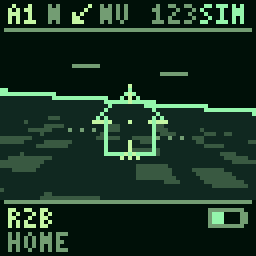
Meaning and next decision
R2B and HOME identify the return presentation.
Next: Proceed toward LAND. The example does not specify a real aircraft's reserve threshold or navigation policy.
Recover
LAND
Finish simulated flight
“I am completing the return sequence.”
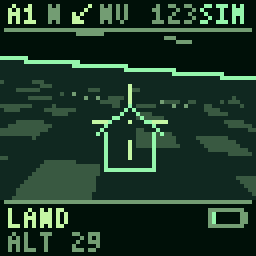
Meaning and next decision
The camera/altitude presentation descends into the home view.
Next: Show CHARGE or STANDBY according to the scripted outcome.
Recover
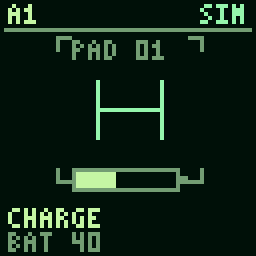
CHARGE
Recharge presentation
“I am unavailable while the demonstration shows replenishment.”
Meaning and next decision
CHARGE includes an animated battery indicator.
Next: Return to standby when the sequence advances. The indicator is simulated, not a measured charging current.
Recover
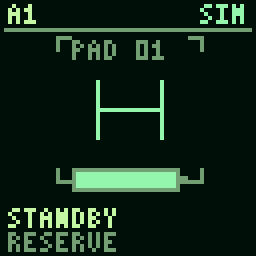
STANDBY
Ready for the next role
“I am waiting at the base.”
Meaning and next decision
STANDBY presents the parked state.
Next: Remain available for a subsequent authorised rehearsal.
Exceptions
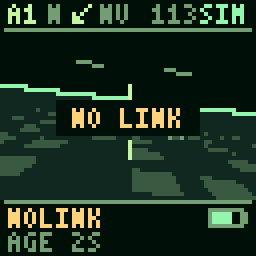
NOLINK
Stale view or missing link
“I do not have a fresh view to rely on.”
Meaning and next decision
NOLINK freezes the camera presentation and shows an AGE caption.
Next: Treat the represented information as stale. In this scripted mode, AGE is scene time rather than measured packet latency.
Exceptions
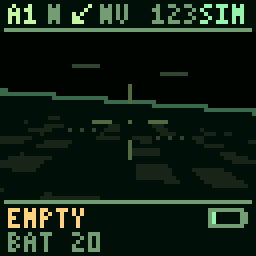
EMPTY
Simulated energy exhausted
“The rehearsal has reached an energy failure state.”
Meaning and next decision
The battery indicator falls and the view dims.
Next: Record the simulated failure outcome. This is not a physical battery measurement or an instruction for aircraft recovery.
Exceptions
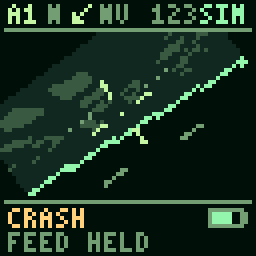
CRASH
Simulated failure outcome
“This run has ended in a simulated failure.”
Meaning and next decision
The view rolls toward the ground, then later shows signal loss.
Next: Preserve the event trace for review. The thumbnail shows an early phase of the display sequence, not a photograph or real crash report.
06 / From a flashing frame to a defensible finding
Show what changed because of the message.
Observation. What did this node know before receiving the message?
Communication. Which source sent which content, and when was it actually received?
Decision. What action or symbolic choice followed, and what concise reason code was recorded?
Outcome. How did the choice compare with the separately held director truth?
Counterfactual. With the same seed and observations, did withholding or scrambling the message change the outcome?
In the separate learning lab, a listener learns sender–symbol associations from training feedback. During held-out evaluation, decoded peer cues contribute to its symbolic sector choice alongside its private clue. This is receiver learning with assigned sender vocabularies—not a claim that the panel renderer learned a language.
The Meta reviewers should cite those records and distinguish an observation, an interpretation and a proposed improvement. Reviewing logs does not establish a gain until a new, comparable evaluation measures it. These documentation fixtures are not assessment evidence.
Keep a decision record
Run ID, node identity, firmware/policy version, simulation tick, observation reference, message source and ID, receipt time, selected action, reason code, uncertainty, outcome and missing-data flags.
Keep conclusions bounded
Same-time flashes do not establish causation. More messages do not establish more useful information. A stronger reviewer does not establish a smarter node. Copied SD logs do not establish local execution.
07 / Reproducible documentation
Pixels from the code. Claims with a source.
This package contains the renderer driver, state descriptions, generation script and a source-hash manifest. It makes no network or hardware calls. Use uv run --no-project build-guide.py --repo /path/to/flockinator to regenerate it with C++17 and FFmpeg installed.
firmware/node-platform/include/recon_render.h — actual pixels, captions, colours and pulse timing.
firmware/shared/recon/model.h — scripted states, goals and event construction.
previews/recon-hud/communication.mjs — presentation pairing and broadcasts.
previews/recon-hud/coordination.mjs — the 12-second preview fixture.
tools/mission-host/coordination_lab.py — separate message-learning exercise.
Scope: non-weaponized survey, cooperative observation and recovery. This guide is not a flight-control manual and does not document attack selection or engagement logic.